Learn about the five fire classes (A, B, C, D, K,L) and which fire extinguisher types work best for each. Essential knowledge for home and workplace safety.
Introduction
Fire safety begins with understanding what you’re fighting. Not all fires are created equal, and using the wrong extinguisher can make a dangerous situation catastrophic. Fires are classified into five distinct categories based on their fuel source, and each requires a specific approach to extinguish safely.
The Six Classes of Fire
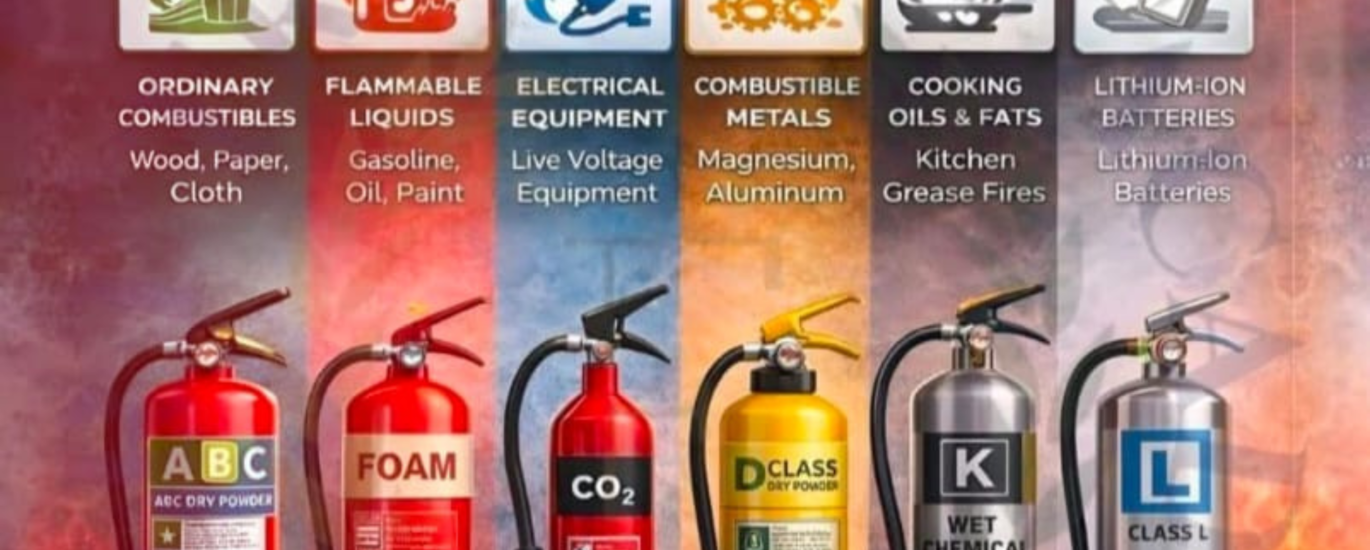
Class A: Ordinary Combustibles These involve common materials like wood, paper, cloth, trash, and plastics. You’ll encounter these in homes, offices, and schools daily. Class A fires leave ash behind and are the most common type of fire incident.
Class B: Flammable Liquids Gasoline, oil, grease, tar, oil-based paints, and flammable gases fall into this category. These fires spread rapidly and can reignite even after appearing extinguished. Never use water on Class B fires—it will spread the burning liquid.
Class C: Electrical Equipment Any fire involving energized electrical equipment—wiring, appliances, circuit breakers, or machinery—qualifies as Class C. The danger here is electrocution. Always cut power before fighting electrical fires if possible.
Class D: Combustible Metals Magnesium, titanium, sodium, and potassium fires occur primarily in industrial or laboratory settings. These metals burn at extremely high temperatures and react violently with water and other common extinguishing agents.
Class K: Cooking Oils and Fats Commercial kitchens face these fires regularly. Modern high-efficiency cooking appliances heat oils to extreme temperatures, making Class K fires particularly dangerous and difficult to extinguish.
Class L: Lithium-Ion Batteries Fires involving rechargeable batteries in smartphones, laptops, e-bikes, and electric vehicles fall into this category. Driven by thermal runaway, these fires generate extreme heat, release toxic gases, and can easily reignite. Standard extinguishers are ineffective against Class L fires, requiring specialized suppression agents.
Matching Extinguishers to Fire Types
- Water extinguishers: Class A only
- CO2 extinguishers: Class B and C
- Dry chemical (ABC): Class A, B, and C
- Wet chemical: Class K and some Class A
- Dry powder: Class D only
- Lithium battery extinguishers: Class L only
Conclusion
Knowing your fire classes isn’t just academic—it saves lives. Check your extinguisher ratings today and ensure you have the right protection for your specific environment.