
Fire Extinguishers
Essential life saving equipment in emergency situation and to extinguish fire at early stage.
Fire Extinguishers...Protect Everything From Fire
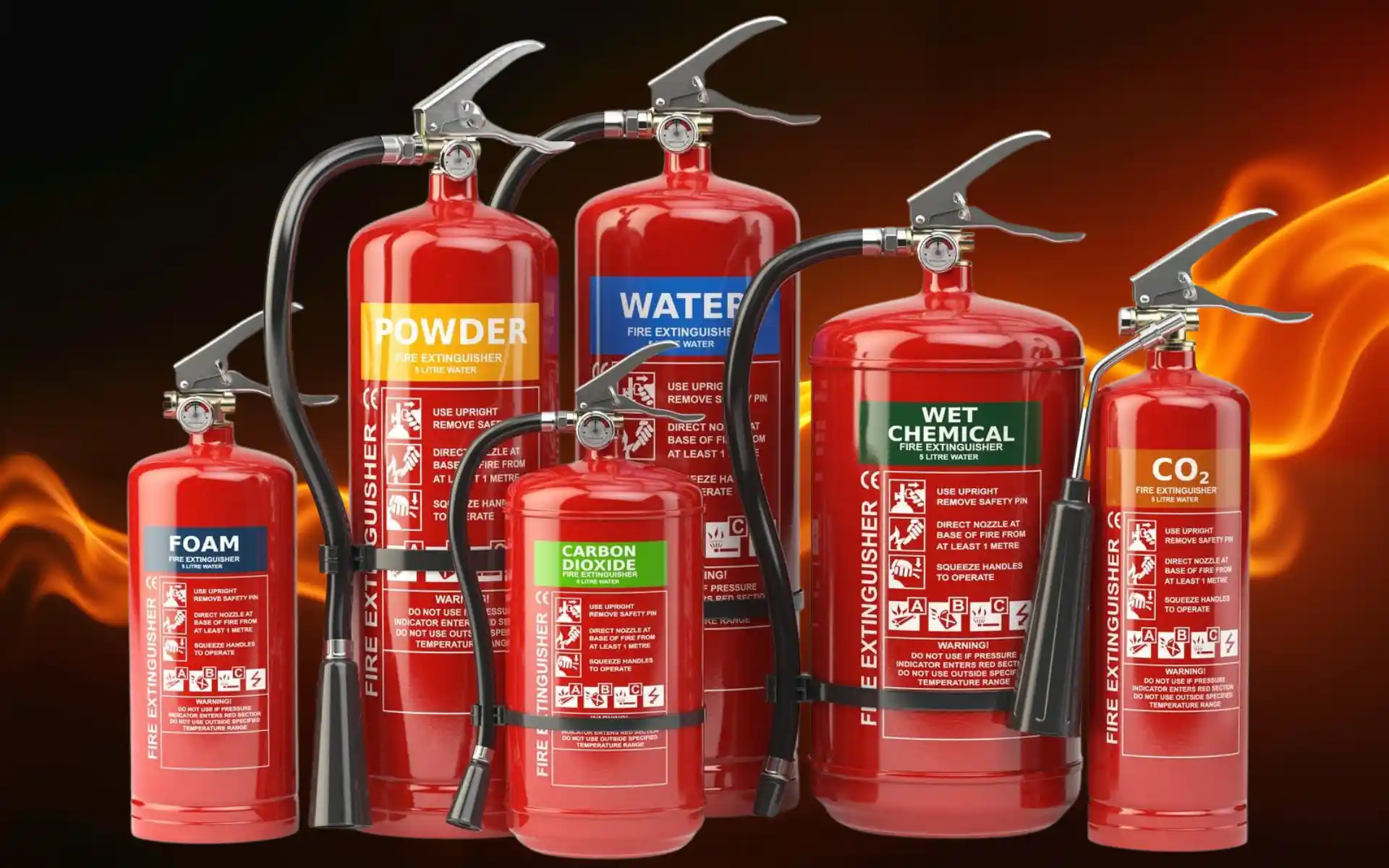
Fire extinguishers are the primary line of defense against small fires before they escalate into major disasters. Designed for quick response, these portable devices are essential for homes, offices, and industrial environments. They work by discharging an extinguishing agent that cools the fuel, removes oxygen, or interrupts the chemical reaction of the fire.
Key Features: Lightweight and portable, easy-to-use discharge mechanism, and suitable for various fire classes (A, B, C, etc.).
Categories/Components: Cylinder body, pressure gauge, safety pin, discharge nozzle, and wall mounting brackets.
Fire extinguishers are categorized based on the type of fuel they are designed to put out. Using the wrong type on a fire can be dangerous.
Types of Fire Extinguishers
1. Water Fire Extinguishers (Class A)
These are the most common type for fires involving organic solid materials.
Best for: Paper, wood, straw, textiles, and coal.
How it works: It cools the fire by soaking the materials and absorbing the heat.
Note: Never use on electrical fires or burning fat/oil.
2. Foam Fire Extinguishers (Class A & B)
Foam extinguishers are highly versatile and more effective than water for certain risks.
Best for: Organic solids (Class A) and flammable liquids like petrol, diesel, or paint (Class B).
How it works: It creates a cooling blanket over the fuel, sealing the surface and preventing flammable vapors from reaching the air.
Note: Not recommended for kitchen fires involving deep fat fryers.
3. Dry Powder Fire Extinguishers (Class A, B, C & Electrical)
Often called “ABC” extinguishers, these are multi-purpose and very common in industrial settings.
Best for: Organic solids, flammable liquids, and flammable gases (Class C) like methane or butane. They are also safe for electrical fires.
How it works: The powder acts as a thermal blast that smothers the fire and stops the chemical reaction.
Note: The powder can impair vision and cause respiratory issues in enclosed spaces.
4. Carbon Dioxide (CO2) Fire Extinguishers (Class B & Electrical)
CO2 extinguishers are the standard for offices and server rooms because they leave no residue.
Best for: Flammable liquids and electrical hazards (computers, panels, generators).
How it works: It suffocates the fire by displacing the oxygen the fire needs to burn. It also provides a cooling effect.
Note: CO2 can cause frostbite if the horn is held during discharge, and it is not effective for Class A fires.
5. Wet Chemical Fire Extinguishers (Class A & F)
Specifically designed for kitchen environments with high-temperature oils.
Best for: Cooking oils and fats (Class F) and organic solids.
How it works: It creates a soapy layer over the burning oil (saponification), which cools the oil and prevents re-ignition.
Note: This is the only type safe for large-scale deep fat fryer fires.
6. Clean Agent (Halotron) Fire Extinguishers (B, C & Electrical)
These are eco-friendly alternatives to older chemical agents, used for high-value equipment.
Best for: Sensitive electronics, data centers, and aircraft.
How it works: It uses a non-conductive volatile liquid or gas that leaves no residue and does not cause thermal shock to electronics.

Providing top-tier fire protection solutions in Tamil Nadu . We specialize in high-quality fire extinguishers, advanced suppression systems, and comprehensive safety training to ensure a safer environment for all.
"THINK SAFE... BE SAFE..."
Useful Links
Our Services
Our Offices
26/32, Thiyagi Natesan Street No.1, Opposite Indira Gandhi School, Ammapet, Salem - 636 003. Tamil Nadu.
© 2026 VAP Fire Safety Equipments.All Rights Reserved.