
Fire Hydrant Accessories
Accessories For the Fire Hydrant
Fire Hydrant System
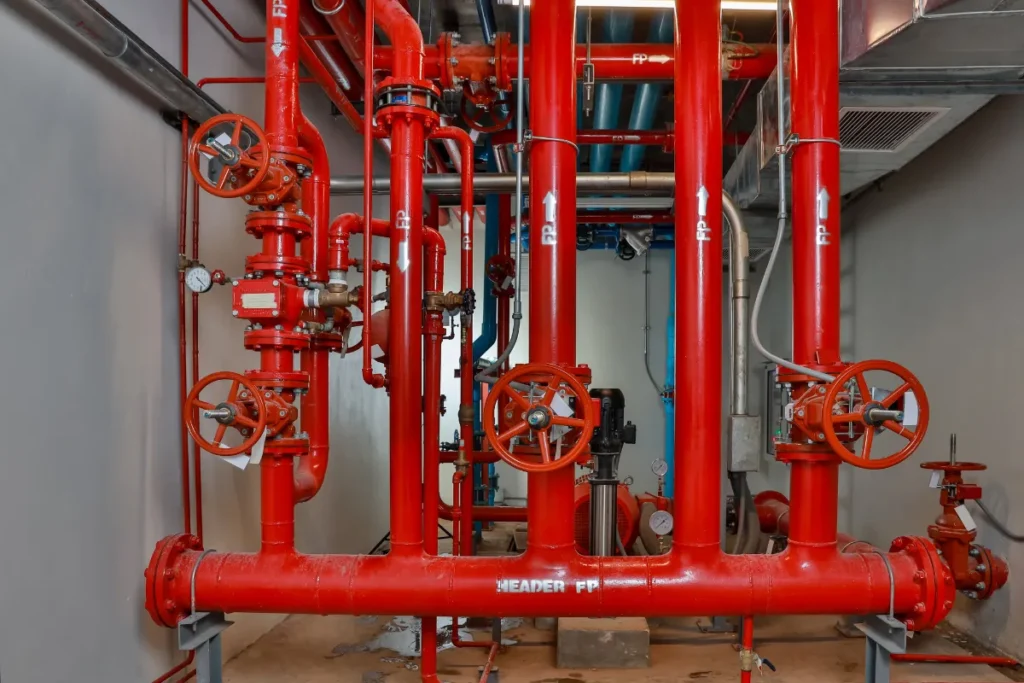
A Fire Hydrant System is a robust water-based suppression network designed to provide a high-volume water supply to fight large-scale fires. It consists of a series of pipes connected directly to a pressurized water source. This system is critical for industrial complexes and high-rise buildings where portable extinguishers may not be sufficient.
Key Features: Provides continuous high-pressure water, 24/7 emergency readiness, and heavy-duty construction for durability.
Components: Fire pumps, underground/overhead piping, hydrant valves, hose reels, and branch pipes with nozzles.
The Fire Hydrant System consists of several critical accessories that work together to ensure a steady and powerful flow of water during an emergency. Here is a detailed list of those accessories in English, tailored for your website:
Fire Hydrant System Accessories
1. Hydrant Valves (Landing Valves)
These are the most visible part of the system, acting as the outlet where the fire hose is connected.
Description: High-quality valves usually made of gunmetal or stainless steel. They are designed to withstand high water pressure and allow firefighters to control the flow manually.
Function: Serves as the primary connection point for fire hoses to draw water from the main pipeline.
2. Fire Hose Reels
Hose reels are the first line of defense for occupants to tackle small fires before the fire brigade arrives.
Description: A high-pressure hose wound onto a circular reel, usually 30 meters in length.
Function: Provides a continuous supply of water and can be quickly unrolled to reach fires in corridors or large rooms.
3. Fire Hoses (Delivery Hoses)
These are heavy-duty flexible pipes used to carry water from the hydrant valve to the fire.
Description: Made from reinforced rubber or synthetic fibers (CPH – Canvas Polyurethane Hose) to prevent bursting under pressure.
Function: Transports water over long distances and around corners to reach the seat of the fire.
4. Branch Pipes and Nozzles
Attached to the end of the fire hose, these control the shape and force of the water.
Description: Available in various types like Short Branch, Diffuser, or Fog nozzles.
Function: Allows the user to change the water from a powerful “jet” (to reach far away) to a “spray” or “fog” (to cover a wider area and cool the air).
5. Fire Hydrant Cabinets (Hose Boxes)
Protective storage units located near hydrant points.
Description: Weather-resistant metal boxes, usually painted bright red with a glass front.
Function: Safely stores fire hoses, nozzles, and fire axes, protecting them from dust, rain, and tampering while keeping them ready for instant use.
6. Fire Hydrant Pumps
The “heart” of the system that keeps the water pressurized.
Description: Consists of a Main Pump, a Standby Diesel Pump (for power outages), and a Jockey Pump.
Function: The Jockey Pump maintains pressure during small leaks, while the Main Pump kicks in automatically when a valve is opened to provide full firefighting pressure.
7. Fire Buckets and Stands
A traditional but essential accessory for immediate small-scale suppression.
Description: Metal buckets filled with sand or water, mounted on a red foldable stand.
Function: Primarily used for small oil spills or electrical fires where water might not be the first choice (sand buckets).

Providing top-tier fire protection solutions in Tamil Nadu . We specialize in high-quality fire extinguishers, advanced suppression systems, and comprehensive safety training to ensure a safer environment for all.
"THINK SAFE... BE SAFE..."
Useful Links
Our Services
Our Offices
26/32, Thiyagi Natesan Street No.1, Opposite Indira Gandhi School, Ammapet, Salem - 636 003. Tamil Nadu.
© 2026 VAP Fire Safety Equipments.All Rights Reserved.