
Create an effective fire escape plan for your home or business. Learn expert strategies for evacuation routes, meeting points, and practice drills.
Introduction
When fire strikes, you have less than two minutes to escape safely. Smoke inhalation, not flames, kills most fire victims—and smoke spreads faster than you can run. A practiced fire escape plan transforms panic into action when every second matters.
The Reality of Fire Spread
Modern synthetic materials burn faster than natural materials used decades ago. A room can reach flashover (full involvement) in just 3-5 minutes. Smoke detectors provide early warning, but only preparation ensures survival.
Creating Your Escape Plan
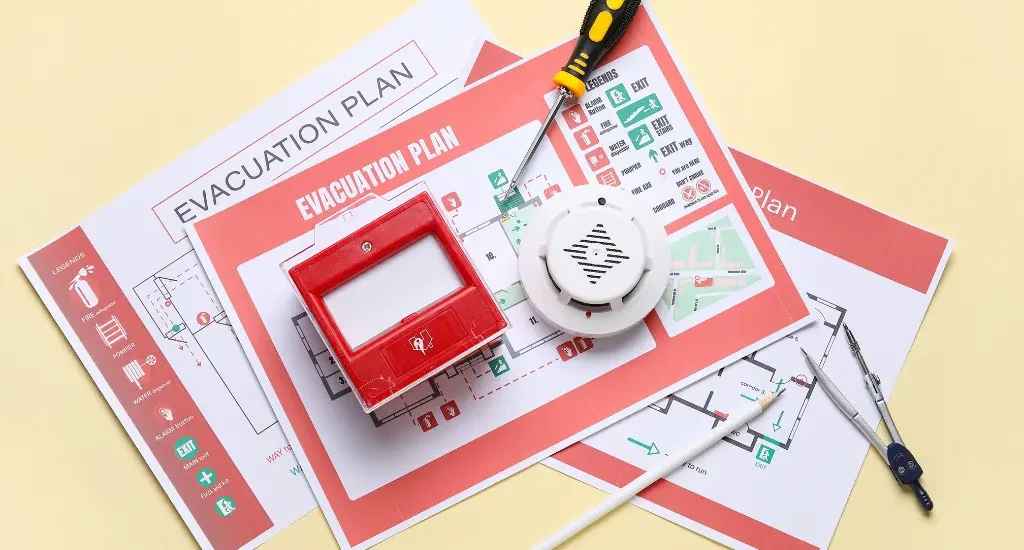
Step 1: Draw Your Floor Plan Map every room in your home or workplace. Identify two escape routes from each room—usually the door and a window. Ensure windows open easily and screens can be removed quickly.
Step 2: Designate Meeting Points Choose a specific location outside—mailbox, neighbor’s house, or parking lot sign—where everyone gathers after escaping. This prevents dangerous re-entry attempts to “rescue” someone already safe.
Step 3: Account for Special Needs Infants, elderly family members, or individuals with mobility limitations need assigned helpers. Practice carrying techniques or evacuation chairs if necessary.
Step 4: Plan for Blocked Paths What if your primary exit is blocked by fire? Identify secondary routes and safe refuge areas—rooms with windows and phones where you can signal firefighters if trapped.
Practice Makes Permanent
Conduct drills twice yearly, varying times and scenarios. Practice crawling low under smoke, testing doors for heat before opening, and the “stop, drop, and roll” technique if clothing ignites. Time your evacuation and aim to improve.
Special Considerations for High-Rises
Never use elevators during fires. Count doors to stairwells in case visibility drops to zero. If stairwells are compromised, seal your door with wet towels, signal from windows, and await rescue.
Conclusion
Fire doesn’t schedule appointments. Your escape plan must be automatic muscle memory, not a mental checklist reviewed during emergencies. Schedule your family drill this weekend—because “later” might be too late.